

What does leadership look like to you?
- Jul 24, 2025
- 3 min read
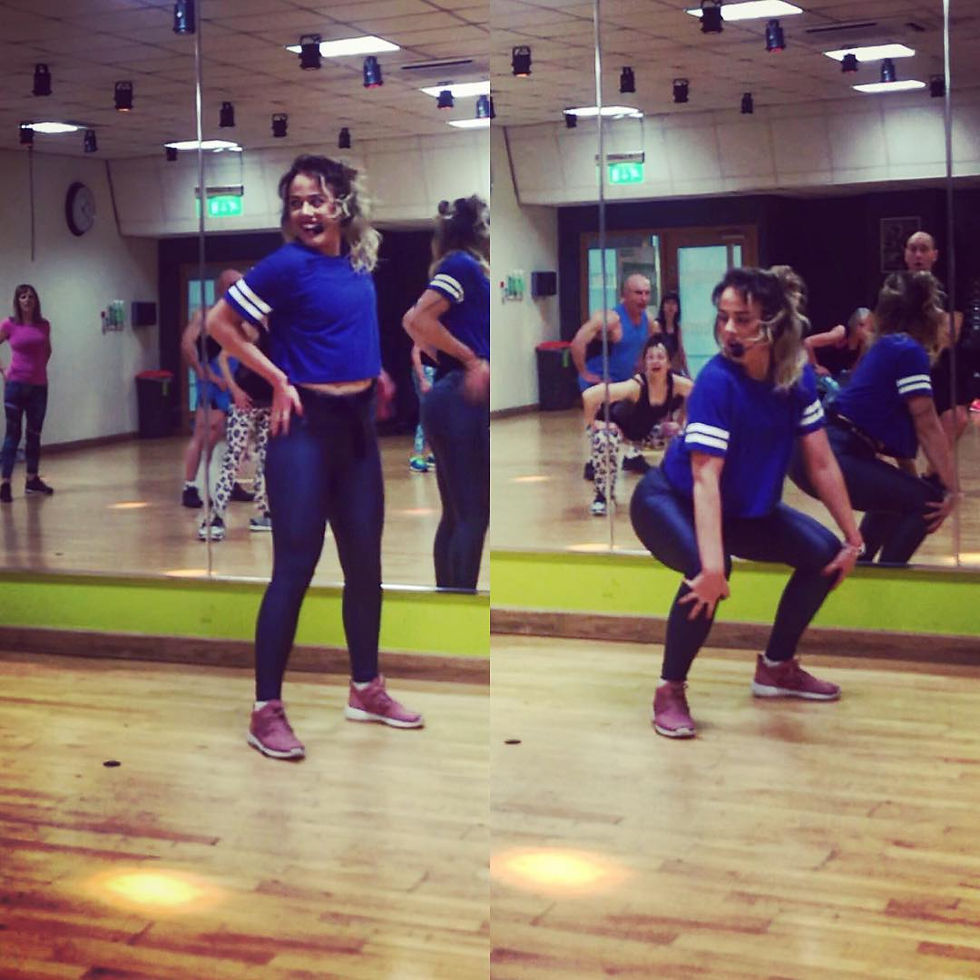
This weekend, I had the privilege of leading this gorgeous bunch through BodyJam 107 – ‘I Am Zee Beautiful Peacock’ (it’ll make sense if you take the class). It was a fabulous session, the group brought incredible energy, good vibes and by the end of the hour we’d all achieved our collective goal of dancing together, to improve fitness, coordination, memory and ultimately have a whole lot fun.

However, it got me thinking about leadership and the development of leadership skills. I’ve been in the fortunate position to have been developing what I feel are important leadership skills since the age of 16, when I began working in the dance, fitness and education sectors. Whilst my career now straddles two different sectors (between dance and education and the human factors profession), the skills that I learned in my early career as a leader were fundamental to how I lead today in both careers.
Leaders, in some cases particularly where there are more hierarchical, or less progressive organisational cultures, can be viewed as requiring dominance, aggression, micro-management, successful development of a fear – culture, lack of approachability, establishment of a steep gradient and hierarchy and fast decision-making in order to be successful. Think about those leaders who I’m sure we’ve all come across at some point in our career, and note how many times colleagues may have said something about a particular leader along the lines of ‘they’re a really fast decision-maker’, ‘they’ve got their finger on the pulse of what everyone is doing’, ‘they were really strong in that meeting, they spoke a lot’ or you’ve felt that it’s risky to voice your opinion, send an email response, or even just walk over to their desk for a conversation. This can develop organisational cultures where people don’t feel safe to speak up, question organisational practice, raise concerns, or even just have a conversation and develop a relationship with that particular leader. Ultimately, what this taps into is the competence of a person to be a leader, and the perhaps over-confidence in their ability to be so. It also may be, that those appointing that particular leader have had success in their career by demonstrating those characteristics themselves, perhaps in a different generational form of management.
Leadership, and what we know about successful leadership of course looks very different to this. Think about a leader now that you respect and are inspired by. What skills do they have that enables that feeling? Perhaps:
1. Trust – the combination of benevolence, integrity and ability (Burke, 2007) is key to developing trust with those around you as a leader. In building and developing these three pillars, we can have confidence that a leader is practising trustworthy leadership.
2. Psychological safety – it is paramount that any leader develops psychological safety within their teams. This ensures that those around you can raise concerns, question or disclose mistakes without fear of punishment or embarrassment.
3. Leading by example – embodying the behaviours and actions you would like to see in those around you such as honesty, constructive feedback, support and admittance of fallibility can really help to ensure open communication.
4. Demonstrating value – ensuring those around you feel valued, through recognition, recognition of effort and honest praise provides motivation and a sense of honest connection between a leader and their team. In addition, it is key to ensure that every single person feels a sense of value and purpose; no one person is more important than another.
5. Putting ego aside – the best leaders put their ego to one side and learn that their views, their experience, and their role is only as important as everyone else’s. The best decision is not necessarily the one that satisfies one’s ego.
6. Care for wellbeing – caring for the wellbeing of those you interact with and taking time to get to know them, shows that a leader cares, and that one is more than a just a number.
This list is not exhaustive by any means. But when I think about how I lead as a dance and fitness coach, I know that the skills I learned in the studio made me the leader I am today.


Comments