

The Human Factors behind launch week
- Jul 23, 2025
- 7 min read
Updated: Jul 24, 2025
As a Human Factors Specialist, whatever I do in my life, I’m often thinking about how Human Factors relates to it, and how I can communicate this with people to increase the understanding and awareness of human factors.
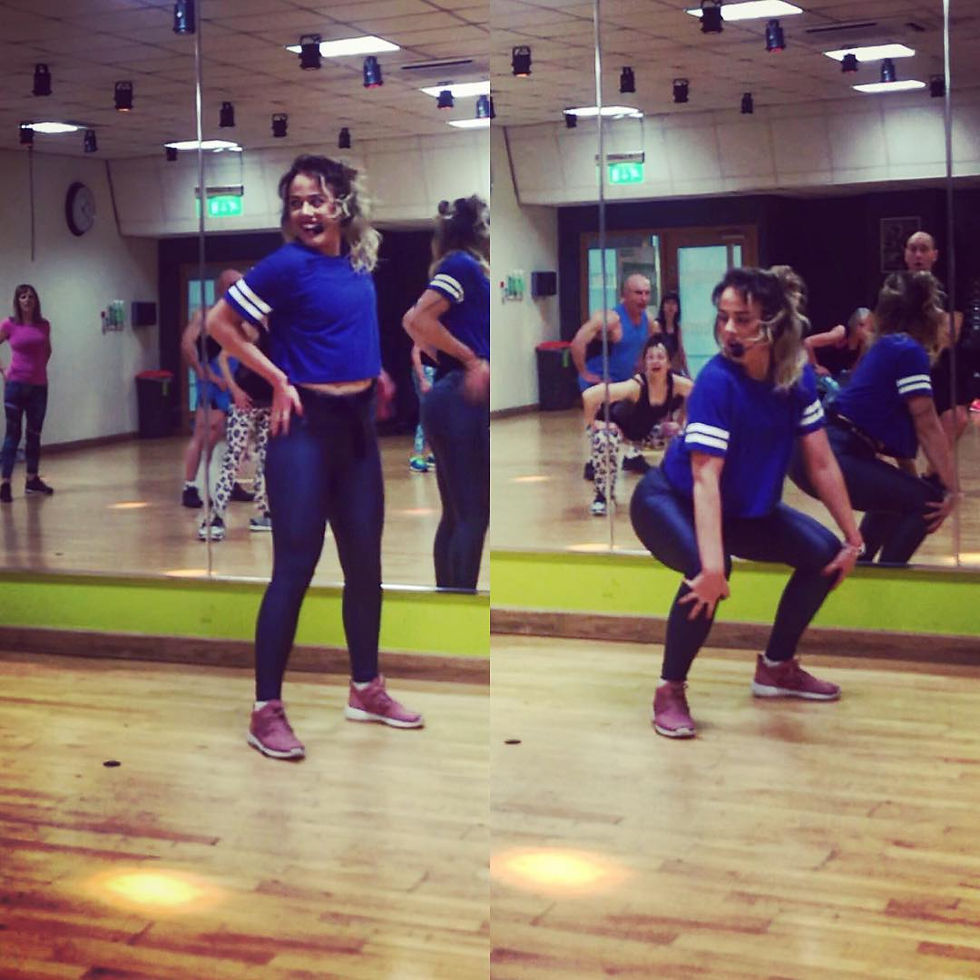
Most of you know, but if you don’t, I’m a Human Factors Specialist with an MSc in Human Factors. Currently I’m transitioning from one role, into my next challenge in the field (which I’m super excited about and in time will fill you all in). As well as this, I am a dance and dance fitness teacher/instructor (with another incredible opportunity in this field to fill you in on soon enough!)
I teach two Les Mills programmes. If you’re not sure what these are, chances are if you’ve ever attended a class at a gym, you’ve attended a Les Mills class. BodyPump, BodyCombat, GRIT… you name it there’s a lot of them and they’re great workouts. I currently teach both of the dance programmes Les Mills Dance and BodyJam.

Every quarter like clockwork, instructors around the world will be sent new choreography to learn, ready for what we all know and love as ‘launch week’. This is the time of the quarter where instructors will teach the new release to their classes involving new movements, music and goals, and where living rooms, kitchens, bedrooms and gardens are turned into personal studios in order to learn the choreography (apologies to any housemates, partners and parents out there who have to navigate around this).
I’ve just about learned all of the new choreography for my classes and whilst doing this, I’ve been reflecting on the Human Factors associated with this process. I’ll caveat this with saying this is a musing of my thoughts, rather than anything anyone will ever cite in an academic essay, but that I do hope is interesting.
The process for me begins with listening to the new music for both of my classes on repeat for a good week before even looking at the moves associated with it. I get to know the music inside out; the lyrics, the accents and highlights in it, and where the changes occur. Why? Well from a human information processing perspective, associating movement with auditory signals helps me to transfer the choreography pattern into the long-term memory. For example, in one of my tracks, there’s a lyric about ‘bongos’ which almost has an echo after it, and I know at that point, that it’s the last time I do that pattern of movement before I transition into the new pattern of movement – in other words it provides me a signal or a cue. In addition, whilst I may feel at some points during performing the choreography that some of the patterns are ‘forgotten’ (which causes a moment of brain freeze and panic), an auditory cue is likely the only thing I have in that moment to be able to bring that movement pattern to the conscious mind and therefore my most likely chance of ensuring track performance success.
With the music, I also like to take time to think about how it makes me feel. For some music, I may already have associated memories with it, perhaps a night out, or a significant event in my life, and I can bring that experience to the performance. However, for a lot of other tracks I may never have heard them before. But the feel, is likely to generate an emotion within me, which then I can associate with the movement, and it helps it to stay in the long-term memory... as well as generate a more interesting, connected and authentic performance for any of my class members.
Once I feel confident that I understand the music, and that it’s committed to the long-term memory, I start learning the choreography. Every instructor will have a different way of doing this, but my process involves a few key steps. After watching the choreography, I rewrite the routine into my notebook, into what dancers might know as ‘blocks’ but in the human factors world, we’d probably refer to this as the process of chunking. Generally, each track will have between 3 or 5 blocks/chunks of choreography within it and by doing this, it helps me to recall the information in a much less effortful manner.

After this, it’s a case of matching the written chunks of choreography to the music. Almost piecing the two processes together so far. Doing that, helps me to connect the music to movement. There isn’t time in a routine when stood in front of a class to stop and stand still and think about what comes next. The process requires you to find a way to embed the choreography into the long-term memory and for me, that’s physically dancing it, over and over again until I’m confident that recollection of the next movement is effortless.
In addition, I’ll spend a lot of time mirroring the technique of the instructors performing the choreography for me to learn. This approach is multi-faceted and is also something that we as instructors pass on to our classes. Mirroring helps to self-correct, but perhaps more interestingly, when our classes mirror us, there is a lot of science to suggest that it creates an empathetic connection through a deeper understanding of projected emotion – in dance this could be through style, movement accent, or facial expressions for example.
I can generally only learn between 3 and 5 tracks of choreography well per day. That’s my personal memory capacity and as with so much of human performance related work, it’s very much individual so there will be instructors out there who learn more, and some who learn less. However, what I will do before I go to bed in the evening, is to re-read my choreography notes of what I’ve learned that day. There’s an element of ‘recency’ effect here, in that there is an easier ability to recall information that is presented at the end of a process, list or communication (or in this case, the end of the day) and I truly think it helps the mental processing that occurs in my sleep embed what I’ve learned.
Sleep is crucial to the process of learning choreography. During sleep, mental and physical renewal occurs, helping memory consolidation. Often, I wake the next morning and choreography that may have felt jumbled the night before, suddenly is much easier to recall and I know I’m okay to move on and keep learning new material.
It goes without saying that nutrition, hydration and rest are key during launch week to ensuring optimum performance. The reality of it is, that most of us are working full time jobs, still teaching our regular classes, probably training on top of that on the gym floor or taking other classes, as well as rehearsing choreography. It’s a really busy time, requiring extra fuel, adequate hydration and regular stretching and rest to compensate for the additional energy used and strain on the body. Otherwise, there is a chance that an instructor could compromise their human performance.
No matter the preparation, there is always a chance that on the day, errors and mistakes may occur (to err is human after all). It could be in the form of an error slip (for example doing the right move but to the wrong direction), or it could be an error lapse (for example missing an entire movement out of a sequence of movement). Ultimately an error may be defined as an unintended action with an unintended outcome, that occurs at the point of execution. Sometimes, it doesn’t matter how much planning or rehearsal you do, in the moment, on the day something could go wrong. This is likely influenced by some kind of disruption to the cognitive process, which could come from a variety of sources. For example, having members in front of you provides a whole new dimension to think about, such as providing corrections or connecting with them to provide an enjoyable experience. It could also be influenced by the pressures felt of launching new choreography, often in front of seasoned and excited members, or other instructors (who you may be teaching with!) Pressure has an association with error types and therefore in the moment something adverse could occur particularly if a movement pattern isn’t well embedded into the long-term memory yet.
On the other hand, mistakes could occur. These can be defined as intended actions with an unintended outcome, often involving a failure in decision making, or intention. For example, you may realise you’ve learned the choreography incorrectly, and repeat a pattern of movement only twice, rather than four times, only recognised when you realise the music you’re simultaneously playing whilst moving carries on going whilst you’ve stopped, expecting it to be over (absolutely mortifying experience FYI). Or another instructor you’re teaching with does something entirely different to yourself, making you realise one or the other (or both) of you has learned the track incorrectly.
These are just some of the things that I’ve been thinking about whilst learning my choreography for this quarter for my two programmes, LM Dance and BodyJam. It always fascinates me how human factors is so relevant to everything around us, in this case, learning dance choreography, and the clear influence that it has on human performance. Not perhaps something that everyone would correlate with what is ultimately a scientific profession, but I believe is firmly connected. Understanding human factors and human performance has ultimately made me more aware of my own susceptibility and vulnerability to fallibility in the learning and performance process, which has made me able to effectively plan recovery strategies to either avoid or mitigate for errors and mistakes in the process or performance.

One final note – be nice to your instructors on launch week… they’re learning a lot and if they’re anything like me they’ll be aching a little bit right now. Finally, we appreciate chocolate in most forms for that sweet treat boost on launch day.


Comments